
Understanding Lithium-Ion Batteries in Modern Applications: A Personal Experiment
Lithium-ion (Li-ion) batteries have become the powerhouse behind everything from smartphones, Aircraft EVTOL to electric vehicles—and yes, even robot vacuums. As I discovered in my recent troubleshooting project, understanding the intricacies of these batteries can not only help extend the life of your devices but also offer a valuable insight into the future of aviation.
A Personal Experiment with Battery Troubleshooting
A few years ago, I bought a Goovi robot vacuum—an intelligent cleaning companion that made life simpler. However, as with many electronic devices, the battery life started to degrade after consistent use. After owning the vacuum for about 4 years, it was clear that the battery was no longer holding a charge as it once did.
The Challenge: Replacing the Battery
Rather than dealing with expensive shipping and waiting times to get a new replacement battery shipped to the Middle East, I decided to take matters into my own hands. I sourced 18650 lithium-ion cells, a common battery type readily available in the market, and set about creating my own battery pack to replace the faulty one. This is where the real experiment began.
Despite the good intentions, both the original 4-year-old battery pack and the new 2-year-old pack shared the same failure symptoms. When docked to charge, both packs would indicate that they were charging, but once removed from the charging station, there would be no power—no lights, no sounds. At first, I suspected an issue with the Battery Management System (BMS). This led me to dive deeper into diagnosing the problem and performing experiments.
Step 1: Disassembling and Documenting the Batteries
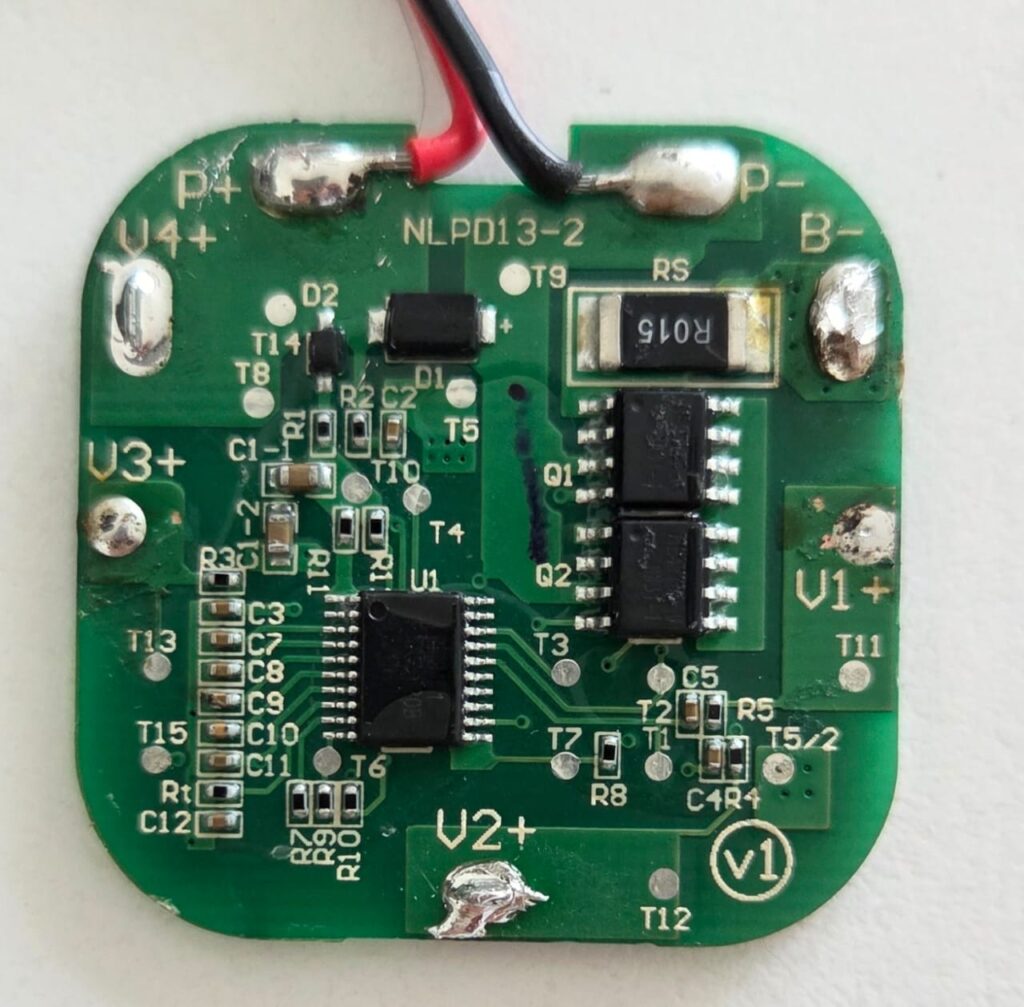
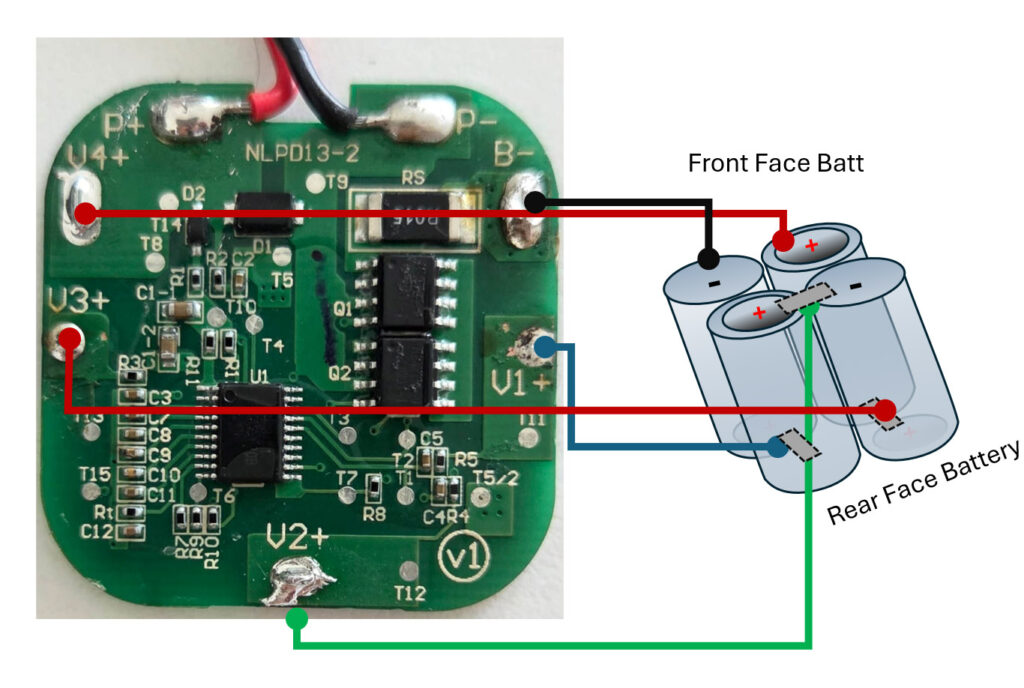
To begin the troubleshooting process, I first disassembled both battery packs—one that had been used for 4 years and one for 2 years—and took detailed pictures, making drawings, and documenting the condition of each part.
By carefully inspecting the inner cells, I observed some corrosion, wear, and tear on the connections, but the most critical issue seemed to be related to the voltage drop, which I suspected was a result of poor cell health and ineffective BMS control.
Step 2: Diagnosing the Voltage and Current Issues
The next step involved measuring the voltage and current of the individual cells. Using a standard voltmeter, I tested the voltage of each battery pack after charging them individually.
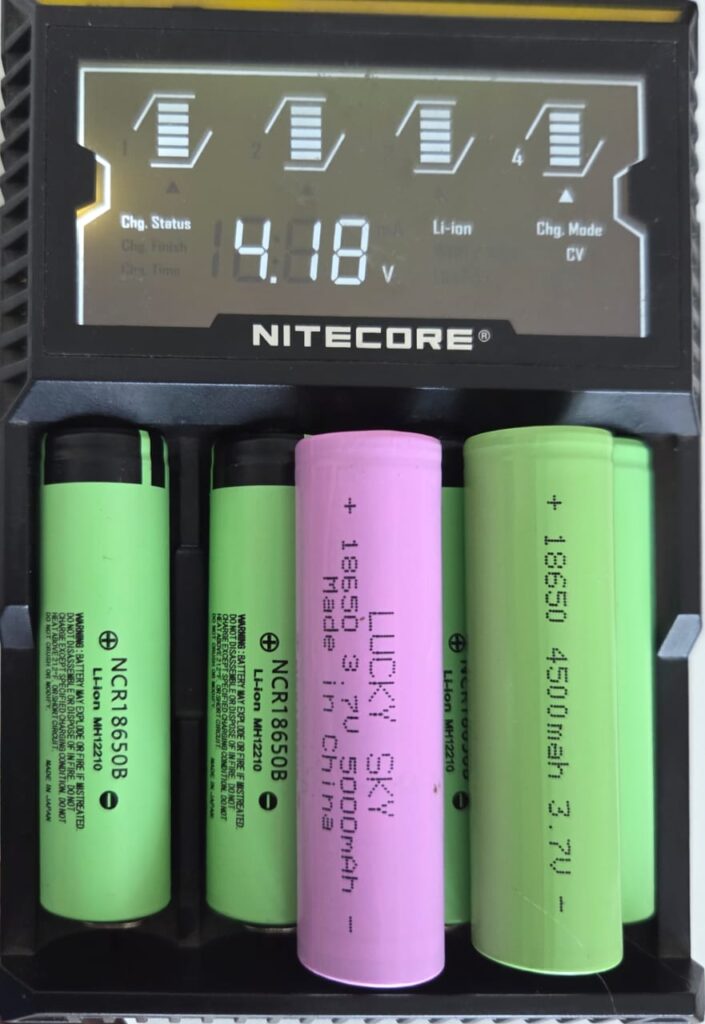
- The 4-Year-Old Battery Pack: After fully charging with an individual charger, the voltage peaked at 4.14V. However, after leaving it for just 12 hours, the voltage had dropped below 4V, which is a significant sign of battery degradation. The voltage decay pointed to a reduction in cell capacity, which could mean that the individual cells were starting to fail.
- The 2-Year-Old Battery Pack: This battery performed slightly better, with 2 out of 4 cells still showing a voltage of 4.14V—a good indication that the battery was in relatively better condition. However, when testing the current draw with a 10A multimeter, the old cells beeped and showed ‘OL’ (overload), meaning the battery couldn’t supply the necessary current efficiently.
- The Lucky 5000mAh Battery: This particular cell, a China-based Lucky brand with 5000mAh, performed remarkably well. After charging, it showed 4.11V, and when tested with a 10A multimeter, the current was stable at 8-9A—a very promising result.
Step 3: Selecting the Right Battery for Replacement
After these tests, I had a clear idea of the types of batteries I needed. To meet the voltage and ampere requirements of the Goovi vacuum, I focused on sourcing batteries with the following specifications:
- Voltage: Ideally 3.7V per cell, matching the typical voltage output of most lithium-ion cells.
- Ampere: I aimed for batteries with at least 5000mAh capacity for better performance.
Most of the available options on the market were from China, with prices ranging from USD 1-1.5 per 5000mAh cell. Some higher-end options came from Japan, with 3600mAh cells that were more expensive but could offer longer battery life per charge cycle.
Conclusion: A Valuable Experiment and the Future of Aviation Batteries
Through this process, I learned the importance of not just replacing a faulty battery, but also understanding its voltage, current, and overall health. With the aviation industry increasingly relying on battery power—especially with the rise of electric aircraft—these lessons are even more critical.
Lithium-ion batteries offer high energy density, are lightweight, and can be recharged multiple times, making them ideal for a range of applications, from robotics to electric aircraft. However, just like my vacuum, their lifespan and performance can degrade over time, especially if the battery management systems or individual cells fail.
As we move towards more sustainable aviation technologies, understanding how to effectively manage and replace lithium-ion batteries will become crucial to keeping electric aircraft and other innovations running smoothly. Just as I discovered through my troubleshooting, ensuring that each cell is in optimal condition and selecting the right battery for the job could mean the difference between a successful flight and a costly repair.
The Future of Lithium-Ion Batteries in Aviation
The aviation industry is already exploring the potential of electric planes that rely on high-capacity lithium-ion batteries. However, as with my troubleshooting experience, the ability to track battery performance, predict failures, and replace cells as needed will be a crucial part of maintaining these aircraft. Whether it’s for emergency landings, extended flight times, or ensuring passenger safety, advanced battery management and smart monitoring systems will help improve both battery life and flight reliability.
By combining personal experience with innovation, we can not only improve everyday tech like robot vacuums but also pave the way for the next generation of clean, energy-efficient aviation.